




Category Archives: Industry Progress

Nextek Receives New UL Classification for Ballast Retrofit:Change Lets Customers Save by Switching to DC Ballasts

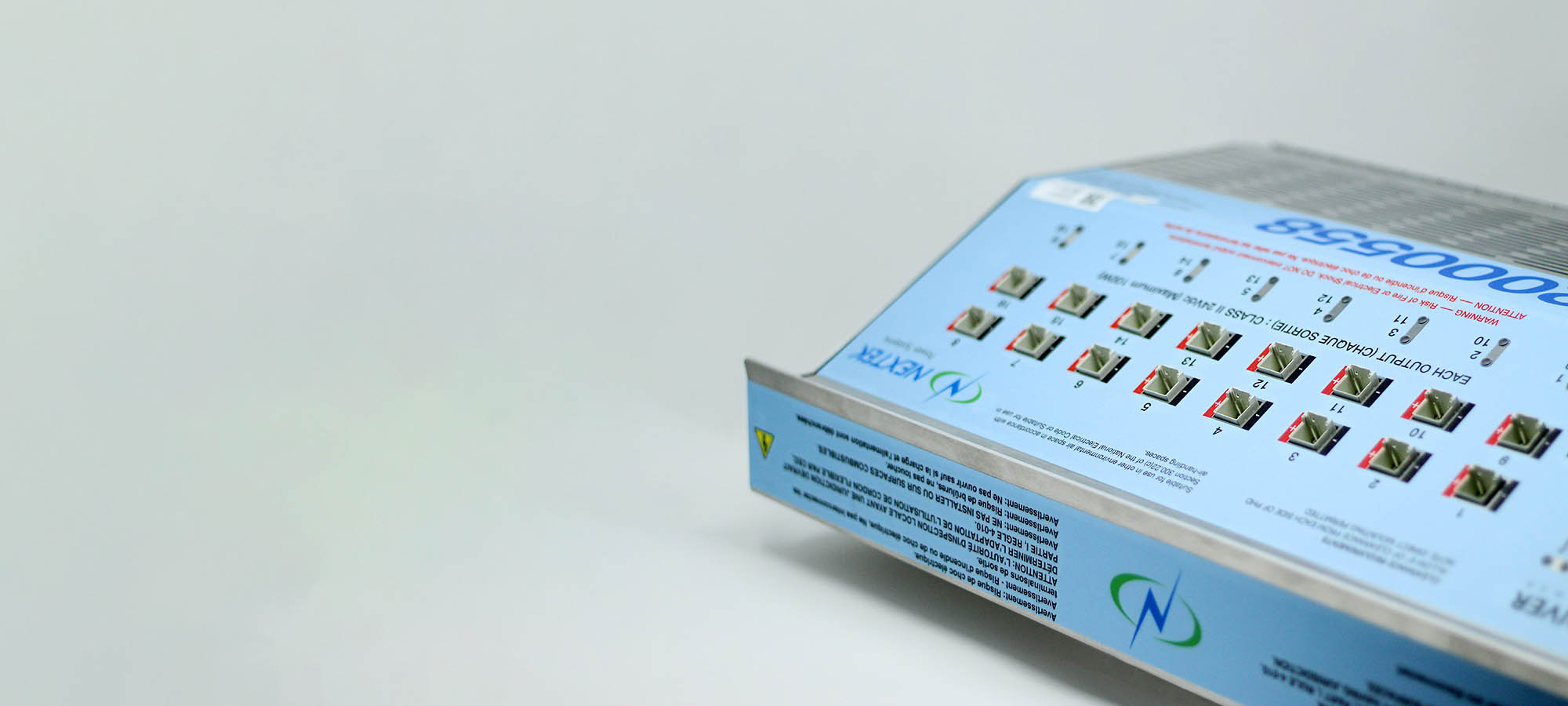
Nextek Power Systems Inc. has received a new Underwriters Laboratories classification that makes it possible to quickly and easily retrofit AC ballasts with safe, low-cost DC ballasts.

The new classification, UL 2108, replaces UL 1598. A team of Nextek engineers and employees authored the document, with guidance from UL regarding safety certification requirements for this innovative retrofit product. The classification and Nextek’s instructions make it easy for building owners and managers to switch out AC ballasts and replace them with DC ballasts, which can reduce the cost of operating luminaires significantly.

Usually, no other changes to the luminaires or the lamps are necessary to accommodate the DC ballasts.

Paul Savage, Nextek Power System’s CEO, said, “We believe our low voltage DC lighting ballasts are the most efficient dimming fluorescent ballasts in the world. Connecting them to our Direct Coupling® Power Server Module (PSM) makes the total system the most efficient commercially available anywhere.

Nextek manufactures ballasts and power supplies for multiple types of T8, T5, CFL and Biax lamps, Emergency Ballasts, and DC Ceiling Fans.  All products are registered with the EMerge Alliance and compatible with that organization’s 24V DC Occupied Space standard.

To view the press release in its entirety, please see this article.

Posted in In the Press | Industry Progress | Press Release Leave a comment

A Glimpse at the Future of Renewable Energy

If our nation and world are to harness renewable energies and become truly independent of fossil fuels, it will take more than new technologies to complete the transition. We will also need some way in which to manage the various resources so we can keep our energy grid operating at maximum capacity with minimum down time—in short to maintain a state that delivers as much power as the current electrical grid, at less cost and damage to the environment.

Solar, wind, hydroelectric, biomass, geothermal and other energy sources are all subject to large changes in the amount of power they can produce at any particular time. Clouds block the sun, the wind dies, water flow changes—how can we balance our energy needs with what we can produce?

A company in California has taken a first step towards anticipating and managing renewable energy sources. Space Time Insight has developed geospatial and visual analytics solutions that synthesize real-time meteorological, geothermal and other data into intuitive visual displays that help energy managers anticipate power production. Several utility companies are already using the company’s software to help them augment power from the traditional electrical grid. By monitoring conditions, energy managers can tap into available sources and plan for shortages before they happen.

Photo: a graphical representation of solar power generation (green) and availability (red) in California and Arizona, with cloud cover.


Nextek Power Systems’ Direct Current equipment and systems are part of this movement towards energy independence, and use a similar approach. Our building and microgrid solutions, which are based on solar power generation, automatically manage available power sources, drawing from solar panels, then battery storage, before they tap into the AC grid, to keep energy expenses as low as possible for customers. This is the future of electric power.


Posted in Industry Progress Leave a comment

100 Years Later, Edison May Get His Revenge

In the early 1900s Thomas Edison and Nikola Tesla battled over which electrical system would power the nation. Edison believed in Direct Current and Tesla was a proponent of Alternating Current. Ulitimately, AC won because it could be transmitted over long distances, while DC power degraded after less than a mile.

But recent advancements in DC technology may ultimately reverse that century-old decision.

AC power has its drawbacks. Its extremely high voltages and amperages make it dangerous to handle. The ever-expanding use of semi conductors in most of the appliances and equipment we use today, which only use DC, means AC power must be converted, and that process causes up to a 30% power loss, mostly through heat. In addition, worldwide concern over depleting resources like oil and coal, which are used to create electricity, has industries and governments looking towards renewable sources for power creation, such as solar, wind and biofuels, all of which produce DC.

DC’s ability to run on renewable energy sources is also attractive to facilities that need to operate in “island mode,” independent of the AC grid, in case of a supply failure or for the purpose of energy security. Building systems that incorporate small, self-contained electricity distribution networks known as microgrids are also of interest to governments and especially military installations that worry about terrorist attacks.

The growing DC industry, of which Nextek Power Systems, Inc. is a proud member, has made significant progress in creating equipment and systems that save not only valuable resources, but also energy expenses for the businesses and organizations that use them. A recent Nextek demonstration project at Ft. Huachuca, Arizona showed how DC power could save the Army base in energy costs now, and save millions of dollars in the future by avoiding reconfiguration costs thanks to the DC system’s flexibility compared to AC.  Additionally, because the installation uses renewable energy created at the site, it is not at the mercy of the AC grid for its power.

Past problems with transmission have been solved too, as the recent installation of DC power systems, covering hundreds of miles, have been seen in Europe and China. In the not too distant future DC power may be the dominant mode of electrical transmission, and Thomas Edison may regain his stature as the king of electricity.

Posted in Industry Progress Leave a comment

New Study Reinforces Case for DC Power Savings

Dennis Symanski of EPRI discussed a new case study on the profile for DC power distribution at the recent Data Center Efficiency Summit in San Jose, California.  At the Summit, Symanski presented results of a DC implementation in a Duke Energy data center which balanced the load across AC and DC distribution systems in the same environment. “We were trying to get as close as we could to an apples-to-apples comparison,” said Symanski, who said the DC system showed energy savings ranging between 14.9 and 15.6 percent versus AC distribution systems in multiple tests with different IT workloads.  To see the entire article and the study, click here.

Posted in Industry Progress Leave a comment

Department of Defense Selects 10 Winners from CTSI Defense Energy Challenge

Energy security and independence are two goals at the heart of the U.S. Military’s investment in clean energy technologies. With over 220 submissions, the 2011 CTSI Defense Energy Challenge has selected the top 10 technologies for presentation at the Asia Pacific Clean Energy Summit on September 14th in Honolulu. These technologies reflect how critical clean energy is to America’s national security.  Nextek Power Systems is proud to be honored with this distinction.  The 10 winners are:

Nextek Power Systems, Inc. (Smart Grid)

Ener-G-Rotors, Inc. (Waste Heat)

California Energy & Power (Renewable Power)

Thermal Conservation Technology (Vehicle Technology)

LanzaTech, Inc. (Biofuel Technology)

ZeaChem, Inc. (Biofuel Technology)

Sempra Energy (Renewable Power)

LaserMotive (Wireless Power)

National University of Singapore (Vehicle Technology)

Seeo (Portable Energy)

To see the complete Press Release, click here.

Posted in Industry Progress Leave a comment

Department of Energy, Department of Army Announce Collaboration

“By increasing our cooperation on advanced vehicle technologies, the Department of Energy and the U.S. Army can accelerate the development and deployment of cutting-edge technologies that will decrease our dependence on oil.” said Energy Secretary Steven Chu.

The U.S. Department of Energy (DOE) and the Department of the Army announced a new collaboration aimed at promoting the joint development of advanced vehicle technologies. During the first-ever Advanced Vehicle Power Technology Workshop – hosted by the DOE and the Army at NextEnergy headquarters in Detroit – Energy Secretary Steven Chu and Under Secretary of the Army Joseph Westphal announced the completion of a new charter that will enhance national energy security and demonstrate the Federal Government’s leadership in transitioning America to a low-carbon economy. The announcement came during the workshop, which brought together more than 80 energy leaders including Nextek Power Systems.

“Through this Alliance, we can strengthen our military, our national security and our economy. Our work together can help create a clean energy economy that will create jobs and make America more competitive.” said Chu.

Under Secretary of the Army Westphal expounded on the workshop’s purpose. “President Obama has made it clear that now is the time to secure our energy future. We must increase efficiency in Army vehicles to accomplish this vital national goal,” Westphal said. “This powerful collaboration between the Army and the Department of Energy will ultimately support our Soldiers and forces, both abroad and here at home, by providing vehicles that are lighter, more efficient, less dependent on carbon fuels, and yet survivable and sustainable. They will provide the platforms for the next generation of fighting systems that are good for the environment and still meet the Army’s military mission.”

The two-day Workshop opened with remarks and perspectives from senior leaders. Breakout sessions began mid-morning and focused on six critical areas:

  •     Advanced combustion engines and transmissions
  •     Lightweight structures and materials
  •     Energy recovery and thermal management
  •     Alternative fuels and lubricants
  •     Hybrid propulsion systems including batteries
  •     Analytical tools

More detailed workshop findings are being compiled, and an announcement of initial projects for joint consideration is expected later this summer.  Check back for further details.

Posted in Industry Progress Leave a comment

Armstrong Premiers DC FlexZone Ceiling Grid

Armstrong World Industries has announced the release of its newest product — the DC FlexZone™ Ceiling Grid — a 24 VDC ceiling suspension system that offers the ability to distribute safe, low-voltage direct current (DC) power that can significantly improve the flexibility and reuse of interior spaces by enabling easier re-purposing and reconfigurations without the need to re-wire. It is the first ceiling suspension system that provides an infrastructure for the delivery of low-voltage direct current (DC) power based on the Emerge Alliance® 24 VDC Occupied Space Standard.  Along with our product partners, Cooper Lighting, Crestron, Focal Point, Lunera Lighting and TE Connectivity we are thrilled to be a part of Armstrong’s newest innovation.  To learn more about the Armstrong DC FlexZone™ Ceiling Grid and all of our product partners click here.

Posted in Industry Progress Leave a comment

Toyota Develops Smart Grid System

Toyota is pairing its little known housing business with its expertise in green cars to sell computer systems that link homes, utilities and vehicles to reduce energy use. Read more about Toyota’s Smart Grid System.

Posted in Industry Progress Leave a comment

Connectivity Week 2010, Santa Clara, California

Connectivity Week is a collection of events that together focus on the application of Information Technology (IT) on the energy challenges facing the world, challenges as illustrated by climate change and the need for sustainability.

Spanning all the major industries and energy consumption areas of commercial, residential, industrial and infrastructure, conference sessions at Connectivity Week explore how IT can be leveraged towards the new energy paradigm facing the world.

Also located at Connectivity Week are a conference and an exposition on key enabling technologies and applications required to make the future energy vision a reality.

Designed for government planners, technology companies, facility developers and owners, consultants and academia – Connectivity Week is an opportunity for stakeholders to network, share “best practices” and develop ideas to solve the world’s energy issues.

Our own Liang Downey was there for the week taking in all of the sights and sounds. According to Liang she often heard “DC power? Yes, I’ve heard of that and it makes sense!” She said it was an incredible opportunity to meet, network and discuss future partnerships. Much is being done in the energy sustainability arena and it’s an exciting time to be involved.

Posted in Events | Industry Progress | Partners Leave a comment